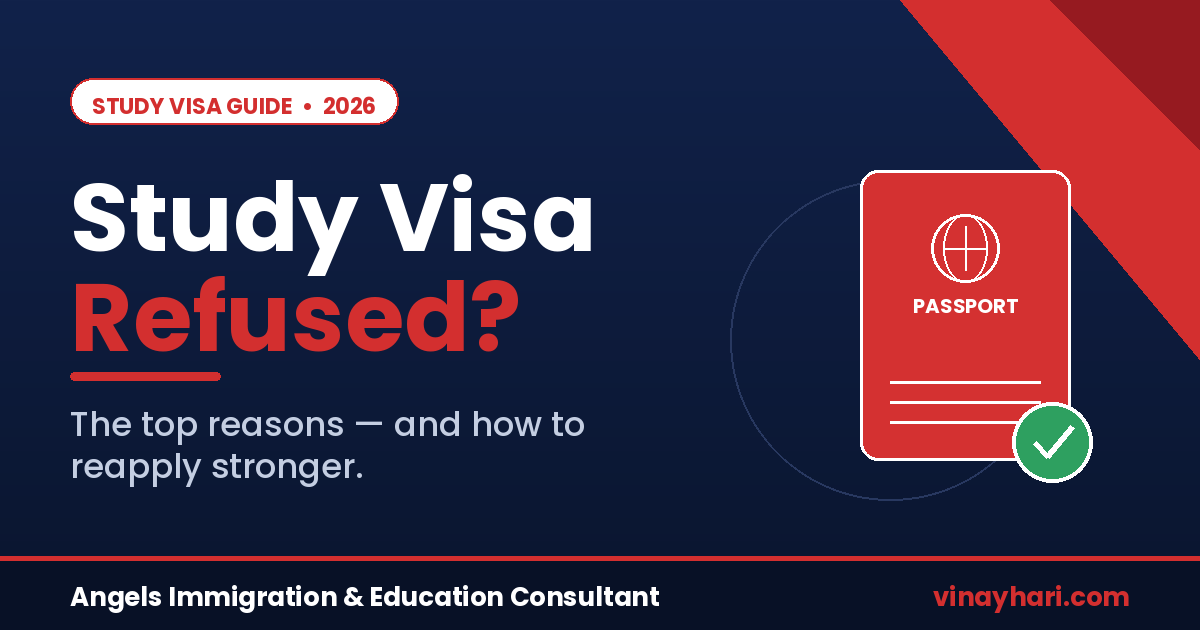
A study visa refusal can feel like the end of your overseas dream — but it isn’t. Refusal rates have climbed sharply over the last two years: Canada alone refused more than half of all study permit applications in 2025, its toughest year in over a decade, while Australia, the UK and several European countries have tightened their rules too. The good news is that most refusals happen for a small number of fixable reasons — and a carefully prepared, honest reapplication can put you in a much stronger position.
In this guide, drawing on years of experience guiding North Indian students, we explain why students face a study visa refusal in 2026, the most common reasons behind a rejection (including Australia’s Genuine Student requirement), how the picture differs by country, a practical reapplication checklist, and answers to the questions students ask us most.
Why study visa refusal rates are rising in 2026
Governments in Canada, Australia, the UK and Europe have tightened student-visa rules to manage record application volumes and to filter out applications that don’t show genuine study intentions. A few key changes are driving the rise in study visa refusal numbers:
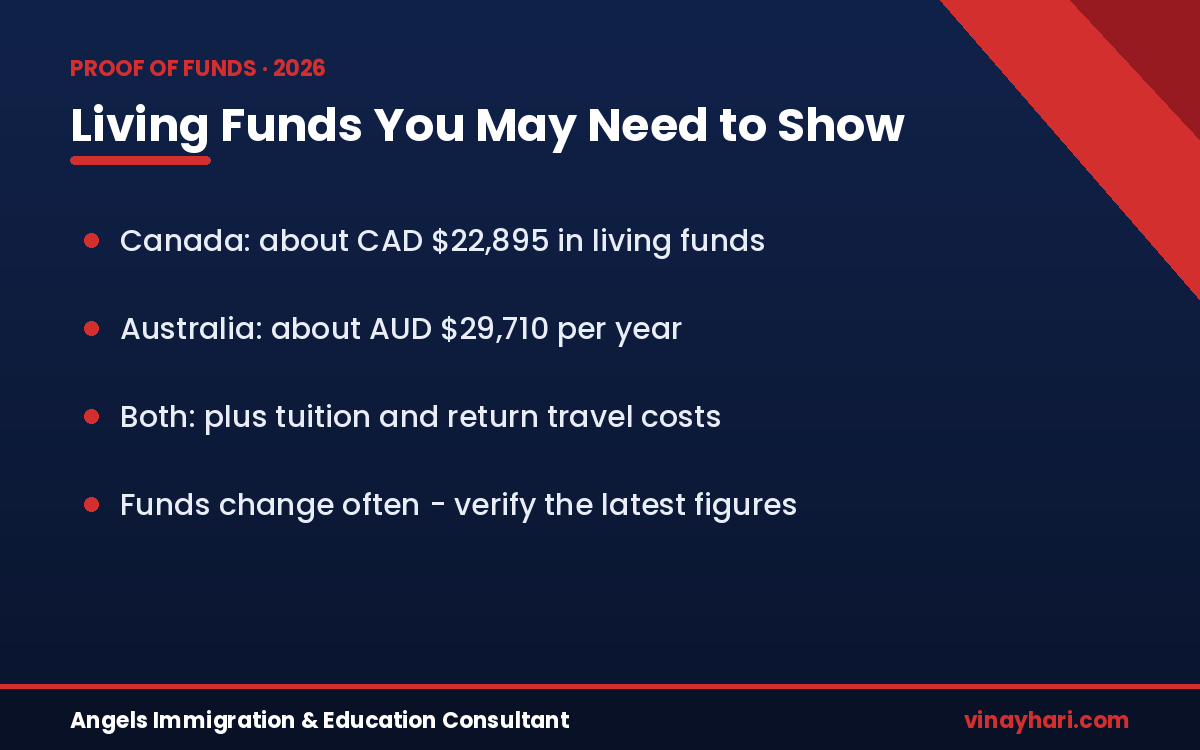
- Canada ended the fast-track Student Direct Stream (SDS) in November 2024. Every application — including those from India — now goes through one regular study-permit stream, with closer scrutiny and higher financial requirements (a single student must now show about CAD $22,895 in living funds, on top of tuition and travel).
- Australia replaced the old GTE test with the Genuine Student (GS) requirement in March 2024, and raised the savings benchmark to around AUD $29,710 per year, plus tuition and return travel.
- The UK and several European countries have also tightened documentation and financial checks.
None of this means a study visa refusal is unavoidable. It means your application simply has to be accurate, well-documented and genuinely convincing.
In the short video below, Vinay Hari explains what has changed and what students should focus on:
Top reasons for a study visa refusal
Across countries, the same handful of issues come up again and again. Here are the six most common reasons a student visa is refused.
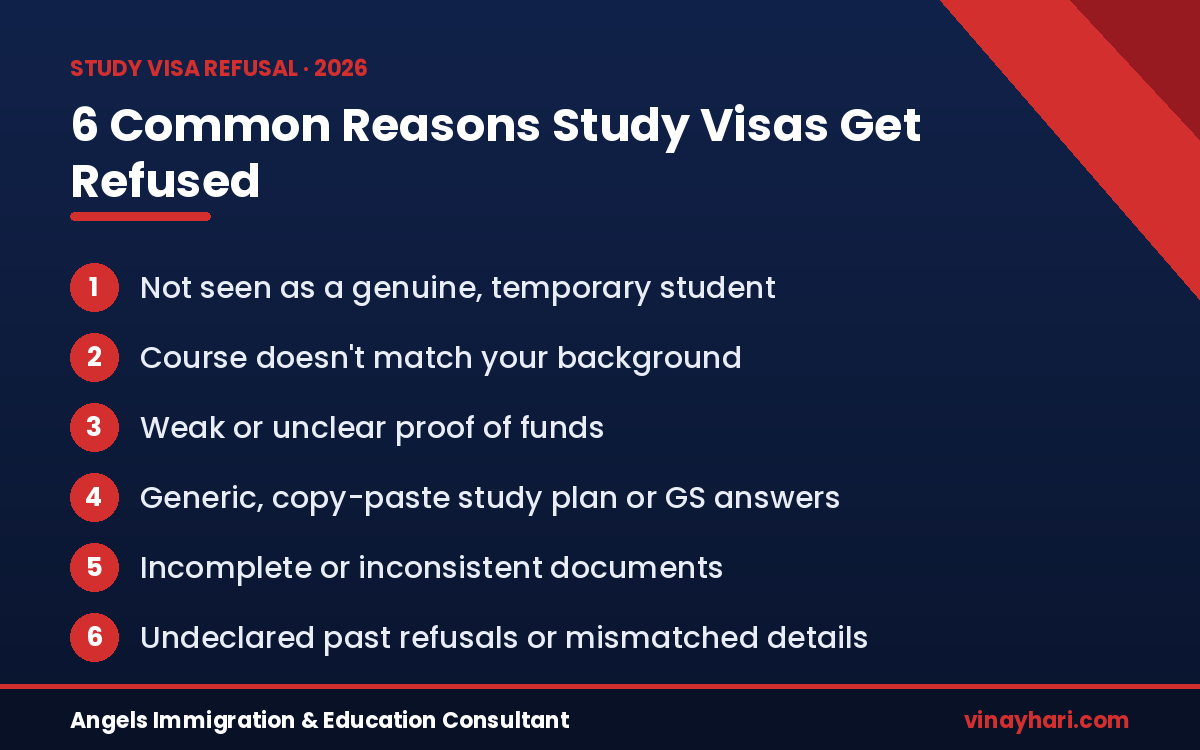
1. You don’t clearly look like a genuine, temporary student
This is by far the most common reason for a study visa refusal. In Canada it shows up as the officer not being convinced you will leave after your studies; in Australia it is assessed through the Genuine Student (GS) requirement. A frequent mistake — especially among North Indian applicants — is over-focusing on PR and jobs abroad while ignoring your study and career plans back home. If your application doesn’t read as a genuine, temporary study journey, expect a refusal.
2. Your course doesn’t match your background
Choosing a low-level course with no connection to your past study or work can look like a “migration shortcut” rather than real study — a major red flag, especially for applicants who are older or have gaps. The closer the link between your previous education and your new course, the easier it is to explain your intentions and avoid a study visa refusal.
3. Weak or unclear financial proof
A study visa refusal on financial grounds is one of the most common outcomes. Officers want to see that you can comfortably cover tuition, living costs and travel — from a clear, legitimate source. Common funds mistakes include large unexplained cash deposits just before applying, sponsors with weak or undocumented income or an unclear relationship to you, and showing money without explaining how it will be used.
4. A weak or “template” study plan / GS answers
Vague, generic, copy-paste or agent-written statements with no personal details are easy for officers to spot. A strong study plan or GS answer tells your real story: past study, then work or a gap, then your chosen course, then a realistic career plan.
5. Incomplete or inconsistent documents
Missing documents, unexplained study or work gaps, and inconsistent information across your forms, GS answers and uploads (different employment dates, different sponsor stories) all weaken your case.
6. Honesty and accuracy issues
Not declaring previous refusals, mismatched names or dates, or anything that looks like misrepresentation can lead to a study visa refusal — and in serious cases, a ban. Always declare past refusals and visits honestly.
How much money do you need to show in 2026?
Money is one of the most common triggers for a study visa refusal, so it deserves its own attention. Visa officers are not only checking how much you have — they are checking whether the funds are genuine, legally sourced and properly explained. For 2026, a single student heading to Canada must show roughly CAD $22,895 in living funds for the first year, on top of tuition and travel. Australia expects savings of around AUD $29,710 per year, again in addition to course fees and return airfare. These benchmarks change regularly, so always confirm the latest figures for your country and intake before you apply.
Beyond the headline number, officers look closely at the source and history of your money. Large, unexplained deposits that appear just before you apply are a red flag. So are sponsors whose income doesn’t match the amount being offered, or whose relationship to you isn’t clearly documented. The strongest financial profiles show a steady history, a clearly related and solvent sponsor, and a simple, honest explanation of how the money will cover tuition, living costs and travel.
How to strengthen your reapplication after a study visa refusal
A study visa refusal is not a permanent “no.” Here is how to rebuild a stronger case:
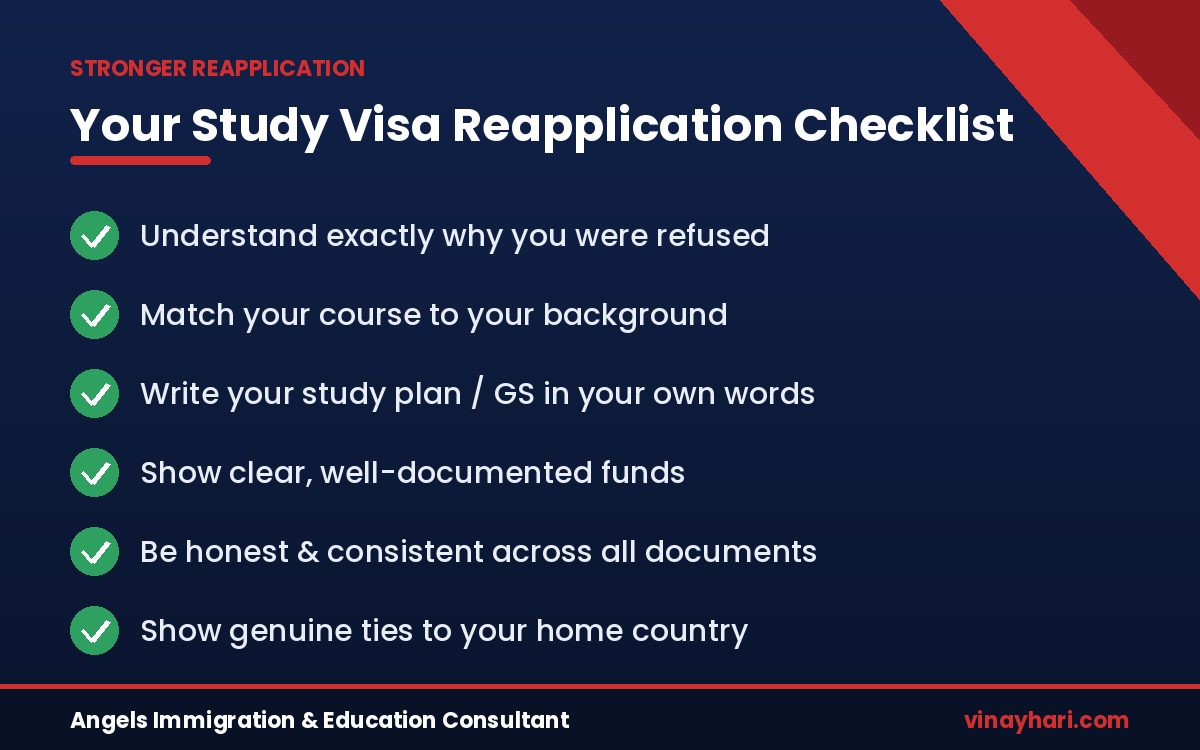
Understand exactly why you were refused — Start with the refusal letter and, where available, the officer’s notes (for Canada, request your GCMS notes; for Australia, identify which GS factor was weak). Never simply resubmit the same file.
Match your course to your background — Choose a course and level that logically follow your previous study or work, so your genuine-student story holds together instead of looking like a shortcut.
Write your study plan / GS answers in your own words — Make them truthful and personal: why this course, this college and this country, and your realistic career plan. Stay within any word limits and keep every answer consistent with your documents.
Get your finances right — Show funds with a clear history (not last-minute deposits), a sponsor with documented income and a clear relationship to you, and a simple explanation of how the money covers tuition, living and travel. Ideally, start planning your funds 6-12 months before you apply.
Be honest and consistent everywhere — Declare all previous refusals, explain every study or work gap, and make sure names, dates and details match across your passport, forms, GS answers and uploaded documents.
Show genuine ties to home — Family, property, career prospects or commitments back home that give you strong reasons to return can help reassure the officer about your intentions.
Improve what was weak — If academics or IELTS/PTE were the issue, consider improving your scores or choosing a course that better matches your profile before reapplying.
Study visa refusal by country: what to watch for
While the core principles are similar everywhere, each country has its own emphasis. Here is what tends to drive a study visa refusal in the destinations North Indian students choose most.
Canada
Since the Student Direct Stream closed in late 2024, every applicant goes through the regular study-permit stream. Officers focus heavily on whether you are a genuine, temporary student with strong ties to home, and on clear, well-sourced funds. Refusals often cite an unconvincing study plan or doubts about your intention to leave after studies. Requesting your GCMS notes after a refusal is the best way to understand exactly what the officer was concerned about.
Australia
Australia assesses new Subclass 500 applications against the Genuine Student (GS) requirement. The most common reasons for a study visa refusal here are weak GS answers, a course that doesn’t fit your background, and finances that don’t add up. Treat the GS questions as the heart of your application rather than a formality.
New Zealand
New Zealand places strong weight on genuine intentions and on funds that clearly cover tuition and living costs. A logical study pathway and an honest explanation of why New Zealand suits your goals go a long way towards avoiding a refusal.
Ireland
Ireland’s student-visa officers look for a clear course-to-career link, evidence of fee payment, and sufficient maintenance funds. Vague study plans and unclear finances are the usual culprits behind a refusal.
United Kingdom
The UK’s points-based student route is documentation-heavy: your CAS, financial evidence and English-language proof must all line up exactly. Small inconsistencies between documents are a frequent cause of refusal, so accuracy matters as much as eligibility.
Across every country, the pattern is the same: a study visa refusal is usually about doubt — about your intentions, your funds or your documents. Remove the doubt, and you remove most of the risk.
Australia: the Genuine Student (GS) requirement
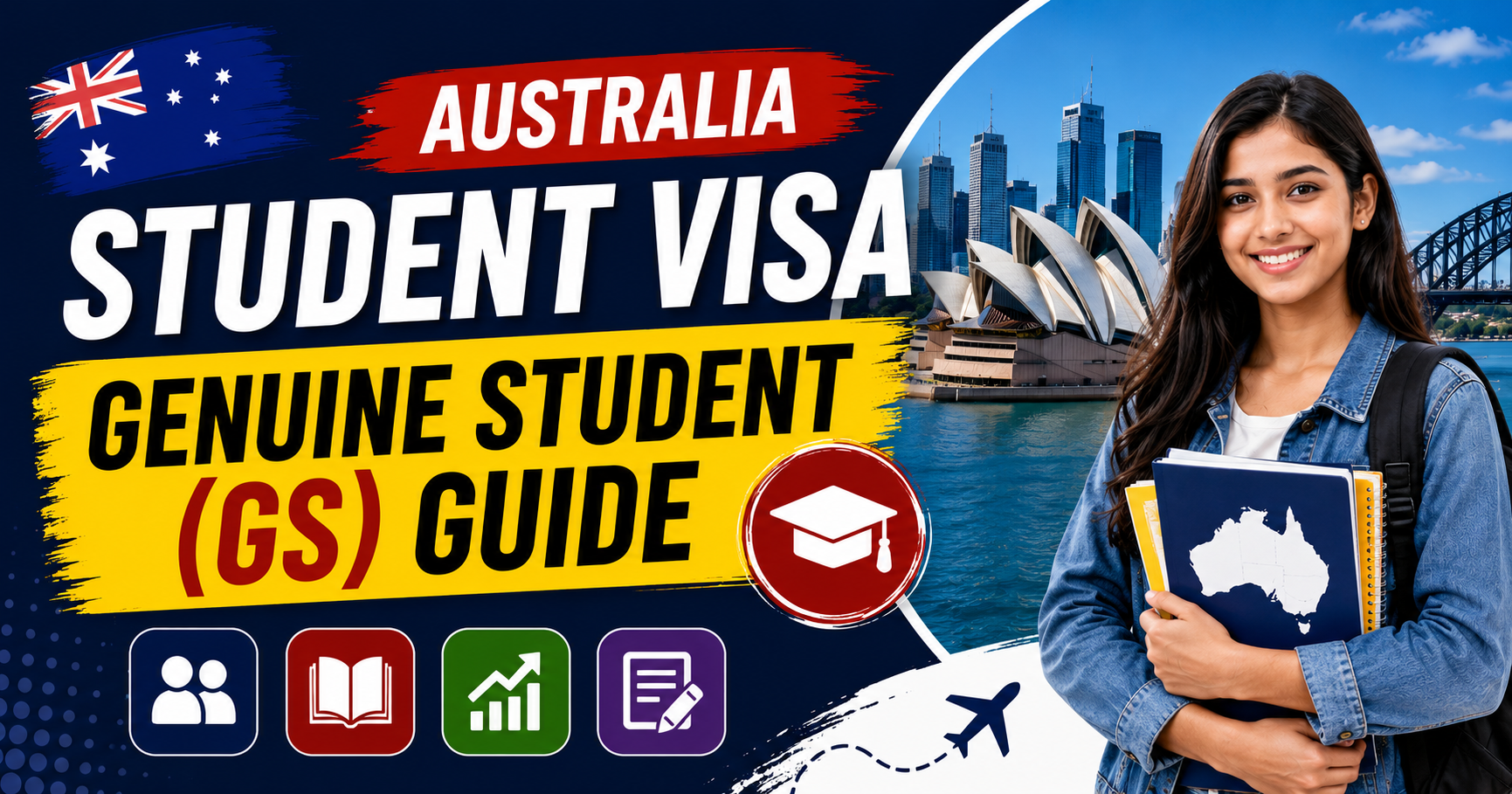
Australia replaced the old Genuine Temporary Entrant (GTE) test with the Genuine Student (GS) requirement for applications lodged on or after 23 March 2024. GS is answered inside the online application form, with a 150-word limit per response, and the Department gives more weight to answers backed by evidence.
Australia is the country where refusal reasoning differs most from the others on this list, so we have covered it separately and in full. If Australia is your destination, read our detailed guide to Australia student visa refusal, which explains how to read your refusal letter, what each refusal ground actually tests, the current funds figures and how to reapply.
A real-world example
Consider a common situation we see. A student applies for a diploma that has little connection to their bachelor’s degree, writes a short, generic study plan, and shows a lump sum deposited a week before applying. The application is refused on genuine-student and financial grounds. For the reapplication, the same student chooses a course that builds on their degree, writes an honest study plan in their own words explaining their career goal, and shows a six-month funds history with a clearly documented sponsor. Nothing about the student changed — only the clarity and honesty of the application did. That shift, from a rushed file to a well-explained one, is what turns a study visa refusal into a credible fresh attempt.
Documents to prepare before you reapply
A stronger reapplication is built on stronger paperwork. Before you submit again after a study visa refusal, gather and double-check the following:
- Your refusal letter and any officer notes — the starting point for fixing what went wrong.
- Academic records — degrees, transcripts and certificates that show a logical progression to your chosen course.
- English test results — a valid IELTS, PTE or equivalent that meets your course and visa requirements.
- A fresh, personal study plan or GS statement — written in your own words and consistent with every other document.
- Financial evidence — bank statements with a clear history, sponsor income proof, loan sanction letters and a simple funds summary.
- Proof of ties to home — family, property or career commitments that explain why you intend to return.
- Your offer or admission letter — ideally for a course that matches your background.
When these documents tell one clear, honest story, the officer has far less reason to doubt you — and that is exactly what reduces the risk of another refusal.
Should you reapply, or appeal?
For most students, a fresh and stronger application is the practical route after a study visa refusal — especially where the refusal was about finances, documents or study plan. In some cases (and some countries), an appeal or review may be an option. The right choice depends on your exact refusal reason and timeline, which is where experienced guidance makes a real difference.
Frequently asked questions about study visa refusal
Can I reapply immediately after a study visa refusal?
In most countries, yes — there is usually no mandatory waiting period. But applying again too quickly, without fixing what went wrong, simply leads to another refusal. Take the time to understand the reason, gather stronger evidence, and only reapply when your file genuinely addresses the officer’s concerns.
Will a previous refusal affect my future applications?
A refusal on its own does not permanently block you, and many students succeed on a second or third attempt. What does cause lasting damage is hiding a refusal or giving inconsistent information. Officers can see your history, so honesty protects you.
Do I have to declare a past visa refusal?
Yes, always. Almost every application form asks whether you have been refused a visa by any country. Declaring it honestly — and briefly explaining what you have improved since — is far safer than risking a finding of misrepresentation, which can lead to a multi-year ban.
Should I change my country or course after a refusal?
Not automatically. Switching country to “escape” a refusal rarely works if the underlying weakness — funds, study plan or course fit — isn’t fixed. Sometimes a better-matched course in the same country is the smarter move. The right answer depends on why you were refused.
How long does it take to prepare a stronger reapplication?
It varies, but giving yourself a few weeks to gather documents, rebuild your study plan and, where needed, show a longer funds history is realistic. If finances were the issue, starting six to twelve months ahead is ideal.
Can a study visa refusal be appealed?
It depends on the country and the type of decision. In some cases a formal appeal or review is possible; in many others, a fresh, stronger application is the faster and more practical route. The best choice depends on your exact refusal reason and timeline.
Does working with a consultant improve my application?
An experienced consultant cannot promise an approval — no one honestly can — but they can help you read the refusal correctly, present your case clearly, and avoid the avoidable mistakes that cause most refusals. The final decision always rests with the visa officer.
Is a study visa refusal the same as a ban?
No. A refusal simply means this particular application was not approved; you can usually apply again. A ban is far more serious and usually follows misrepresentation or a serious breach. This is why honesty on every form matters so much — an honest refusal is recoverable, a misrepresentation finding often is not.
Should I apply to more than one country at the same time?
Some students do, to keep their options open, but each application must still be genuine, consistent and well-funded on its own. Applying widely without fixing the underlying weaknesses simply multiplies your chances of another refusal rather than reducing them.
Get an honest assessment before you reapply
Every study visa refusal is different, and a one-size-fits-all approach rarely works. At Angels Immigration & Education Consultant, we review your refusal in detail, identify what went wrong, and help you put together a stronger, honest application for Canada, Australia, New Zealand, Ireland and beyond. We can’t promise approvals — no genuine consultant can — but we can make sure your case is presented as clearly and completely as possible.
You can book a free one-to-one session to talk through your options before you reapply.
Call or WhatsApp: 9513165527 / 7307530886
Email: me@vinayhari.com
Offices: 505, Sector 82, Mohali & BMC Chowk, Jalandhar
Book a free, no-obligation assessment and take the next step toward your overseas education — the right way.