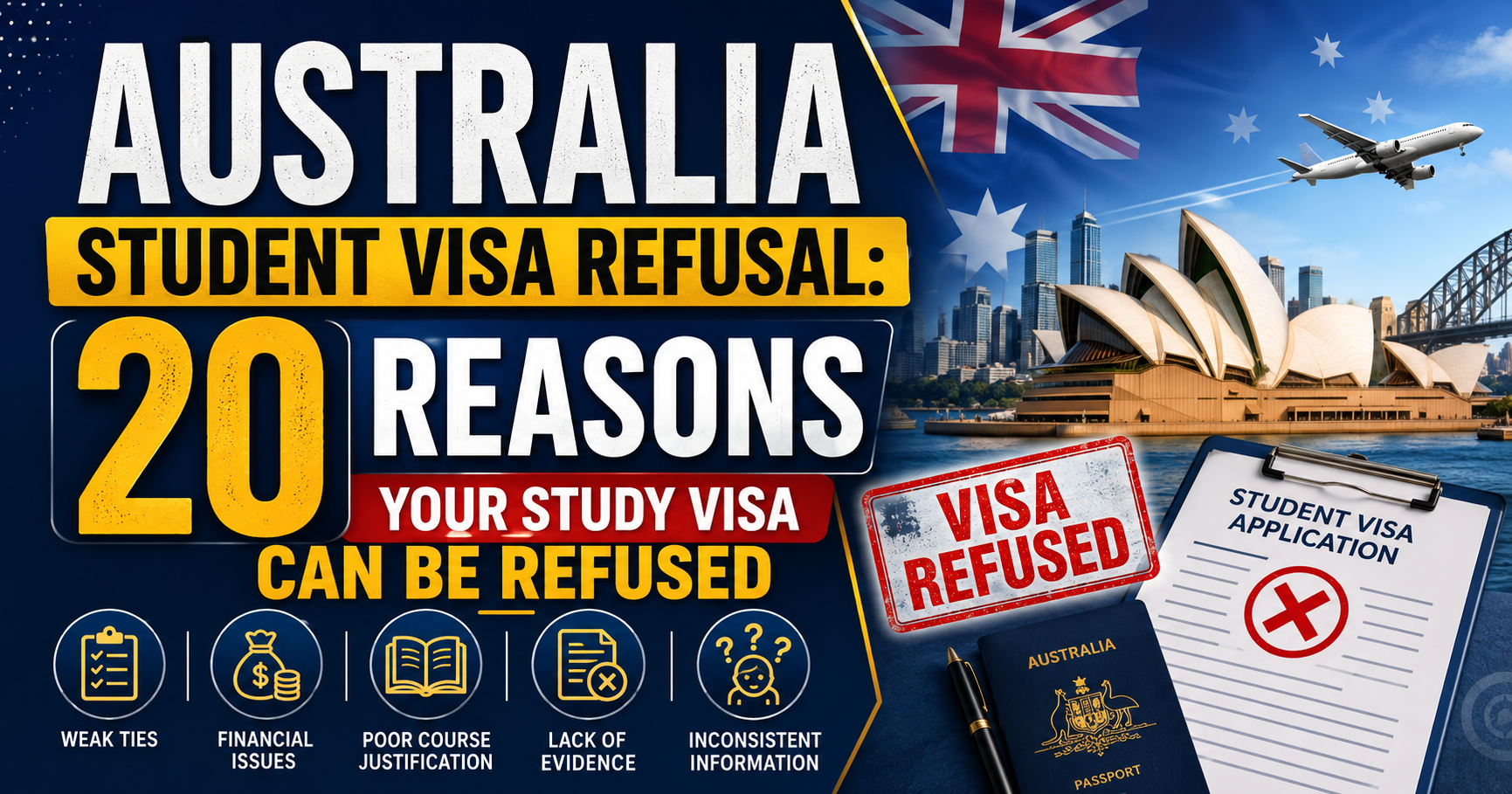

Australia student visa refusal reasons are rarely what applicants expect. Most students refused an Australian student visa did not fail on IELTS. Many had the funds. A lot had a good offer letter from a decent provider.
They were refused because the application, taken as a whole, did not convince the decision maker that studying was genuinely the point.
An offer letter is not a visa. Admission is decided by the education provider. The visa is a separate decision made by the Department of Home Affairs against legal criteria, and the provider has no say in it.
Money in the bank is not enough either. Showing the required amount answers only part of the question. The Department also looks at where the money came from and whether it is genuinely available to you.
A good English score proves English, nothing more. IELTS 7.0 does not make an unrelated course choice make sense.
What sits at the centre of most refusals is the Genuine Student (GS) requirement. And what decides it is not how well your statement is written. It is whether the whole file hangs together: consistent, specific to you, and backed by evidence.
Below are 20 practical Australia student visa refusal reasons. For each one: what it means, why it becomes a problem, and what evidence actually strengthens it.
A note on what these are. They are not “20 official refusal grounds” — Australian law publishes no such list. They are a practical synthesis of the current Genuine Student framework published by Home Affairs and the patterns that recur in the refusal decisions we review. If you have already been refused, start with our guide on how to read your refusal letter and reapply.
Watch: Australia Visa Refusal Explained by Vinay Hari
What this guide covers
- What is the Genuine Student requirement?
- All 20 Australia student visa refusal reasons
- What to do after a refusal
- Frequently asked questions
- Watch the full webinar
- Official sources
What is the Genuine Student requirement?
The Genuine Student requirement applies to student visa applications lodged on or after 23 March 2024. Applications lodged before that date were assessed under the older Genuine Temporary Entrant (GTE) requirement. If you are following advice about writing a GTE statement, that advice is out of date.
Under GS, every applicant must be a genuine applicant for entry and stay as a student, and must show they understand that studying in Australia is the primary reason for applying.
The point most people get backwards
The Department states that the GS requirement recognises that genuine students may develop skills Australia needs and may later choose to apply for permanent residence, and that future intentions of this kind do not count against an applicant.
Read that twice if you have been told to write “I will definitely return to India immediately after my course.” GTE was built around temporary intention. GS is not. What is assessed is whether study is genuinely your primary purpose and whether your choices make sense for someone with your background.
How GS is actually answered
GS is answered inside the online application form, not as a separate attachment. The form asks you to give details of your current circumstances including ties to family, community, employment and economic circumstances; explain why you wish to study this course in Australia with this particular provider, including your understanding of the course and of living in Australia; explain how completing the course will benefit you; and give any other relevant information.
There is a limit of 150 words per response, and all responses must be in English. That limit matters. You cannot talk your way through 150 words. What carries the weight is the evidence attached in ImmiAccount alongside it, because the Department states directly that it gives more weight to statements supported by evidence.
What the Department considers
Your situation at home. Reasons for not studying in your home country if a similar course is available there, the nature of your personal ties, and your economic circumstances.
Your potential situation in Australia. Your knowledge of the course, the provider and living in Australia, your previous study, and how much research you have actually done.
The value of the course to your future. Whether it is consistent with your current level of education, whether it will improve your employment prospects, whether it is relevant to your past or intended work, and the salary it would realistically bring.
Your immigration history. Visa and travel history for Australia and other countries, previous applications, and any refusals or cancellations.
The detailed policy sits in Ministerial Direction No. 106. Every one of the 20 issues below maps onto one of these factors.
Australia student visa refusal reasons at a glance
| Reasons | What it covers | The issue | What usually fixes it |
|---|---|---|---|
| 1-4 | Money and home-country position | Weak economic ties, financial position not demonstrated, unclear source of funds, no comparison with study at home | Documents, not assertions: registrations, returns, sale deeds, a funds timeline |
| 5-7 | Course and provider logic | Thin research, no clear reason for this course, career benefit not demonstrated | Named units, named campus, a role the qualification actually opens |
| 8-10 | Value and direction | Cost versus realistic income, unsupported salary claims, contradictory career plan | Honest figures with a source, and one career story told consistently |
| 11-14 | Gaps and blanks | Unexplained study gaps, contradictions across documents, claims with no evidence, unclear home circumstances | Explain it on your terms before the officer infers it on theirs |
| 15-17 | History and accuracy | Incomplete travel history, undisclosed refusals, incorrect answers on the form | Declare everything, check old passports, read the form yourself |
| 18-20 | How it reads overall | Generic answers, no knowledge of the course, a story that does not hold together | Specific detail in your own English, with five things that connect |
The 20 Australia student visa refusal reasons in full

1. Weak economic ties to your home country
The Department considers the nature of your personal ties and your economic circumstances. Weak ties rarely means you have none. It usually means the file gives the officer nothing concrete to look at.
A claim that your family runs a business and you will return to manage it is unverifiable on its own. The same claim with the firm’s registration, three years of returns and a letter setting out your role becomes evidence.
What strengthens it: business registration and GST returns, employment records with a contact who can confirm them, property or agricultural land documents, family income tax returns.
2. Financial position not properly demonstrated
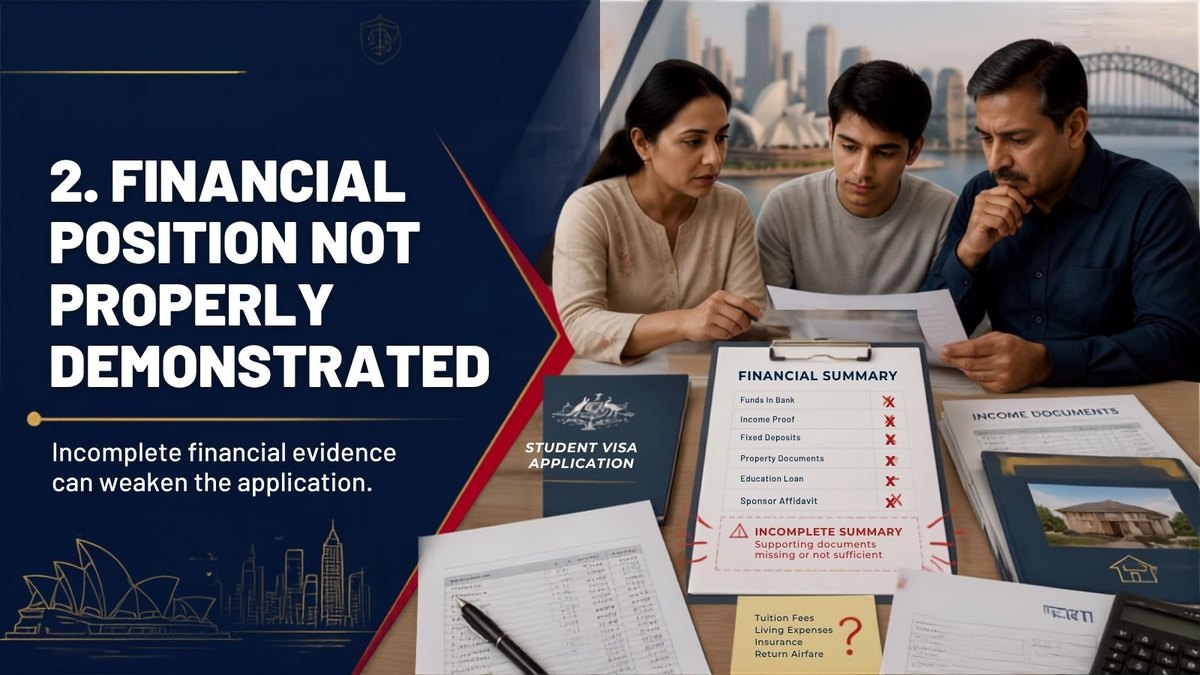
Having the money and proving it the way the Department asks are two different things. The requirement covers travel, the first 12 months of course fees, 12 months of living costs and school fees for accompanying children.
There is a trap worth knowing. Where the document checklist requires financial evidence and you do not attach it, the Department states it may refuse the application without asking you for more information. There is no guaranteed second chance.
What strengthens it: a calculation sheet showing how you reached your total, receipts for fees already paid, and statements showing history rather than a single-day balance.
3. Source of funds is unclear
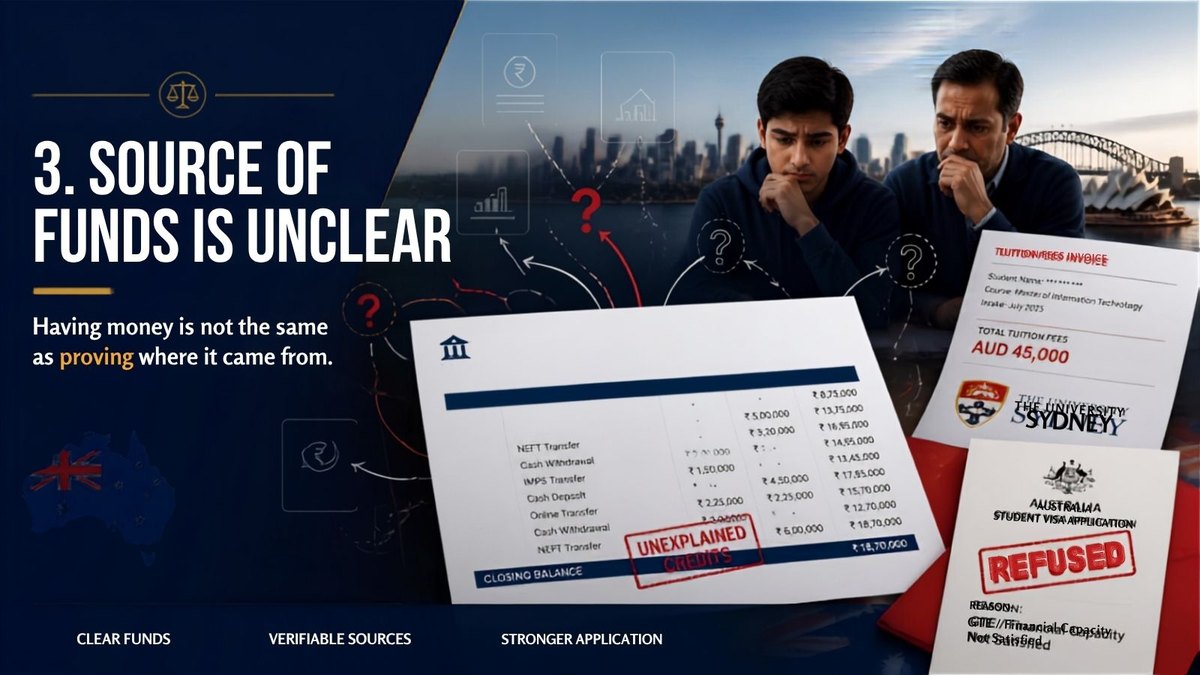
The officer is asking two things about your money: is it real, and is it genuinely available to you. A balance certificate answers neither. A large sum appearing weeks before lodgement with no history invites scrutiny.
This is especially common in Punjab and Haryana, where family wealth often sits in agricultural land and property rather than salaried income, so the paper trail looks unfamiliar to an Australian case officer.
What strengthens it: where funds came from a land or property sale, the registered sale deed, mutation record and a bank trail matching the deed. Where a relative is sponsoring, their capacity and relationship. Plus a one-page written timeline of how the money accumulated.
4. No convincing comparison with study options at home
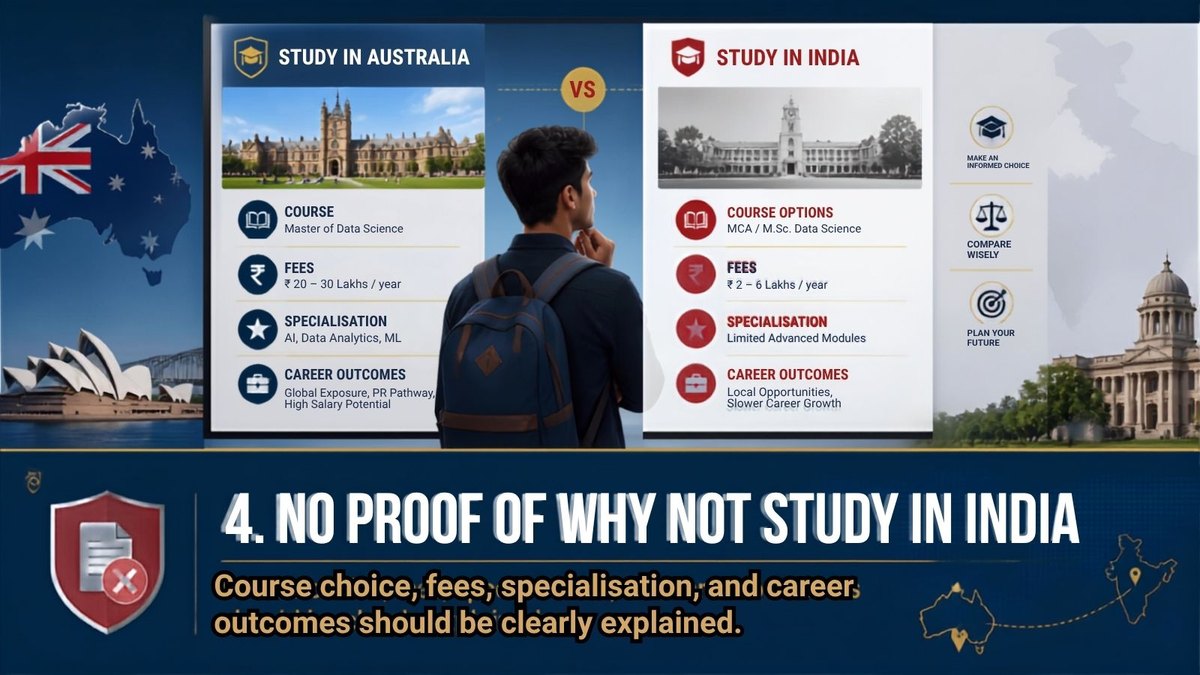
Home Affairs lists this directly: it considers your reasons for not studying in your home country if a similar course is available there. Answering with generalities about international exposure leaves an obvious gap.
“Australia has world-class education” is not a comparison. “The Indian equivalent is a two-year programme without the supply-chain analytics specialisation and industry placement this course includes, which is the area I want to work in” is.
What strengthens it: a specific comparison covering what the Indian equivalent contains, what the Australian course adds, and why that difference matters to your career.
5. Insufficient research into the course and provider
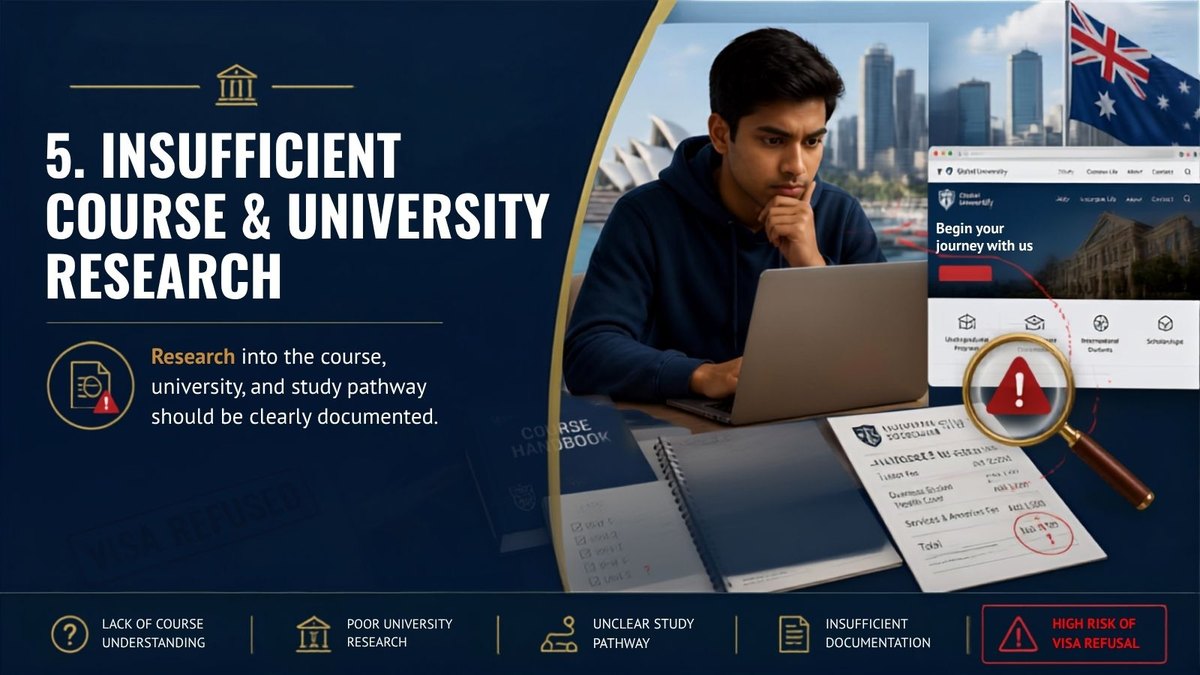
The Department assesses your level of knowledge of the course, the provider and living in Australia, and how much research you have actually done. If you cannot name the core units, do not know which campus you will attend, and have no idea what rent costs there, the inference is that someone else chose this for you.
What strengthens it: naming specific units or majors and why they matter, the campus location and realistic weekly rent, and what you compared before choosing.
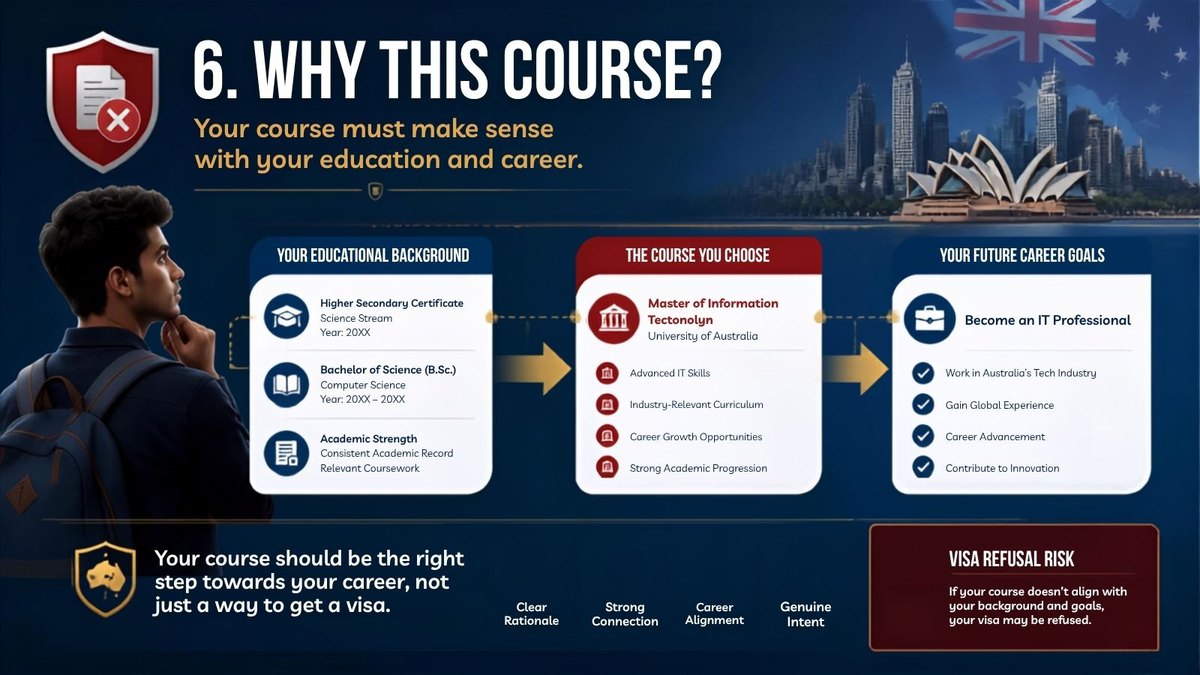
6. You cannot clearly explain why this particular course
“Why this course” is one of the four questions the form actually asks, and you get roughly 150 words. If your answer could be pasted into another student’s application without changing a single fact, it is not doing its job.
A B.Com graduate applying for a diploma below his existing degree writes about wanting management skills, but never explains why he is going backwards. The gap in logic does more damage than anything he wrote.
What strengthens it: a direct line from your qualification or work to this course, and the specific skill or credential gap it fills. Where it is a career change, documented reasons for the change.

7. Future career benefit is not demonstrated
Home Affairs considers whether the course is consistent with your current level of education and whether it will help you obtain employment or improve your prospects. If your answer stops at “better opportunities”, the officer has nothing to weigh.
What strengthens it: the specific roles the qualification opens, the industry you are targeting, how the course builds on experience you already have, and information supporting the claim.
8. Course cost versus expected future income does not add up
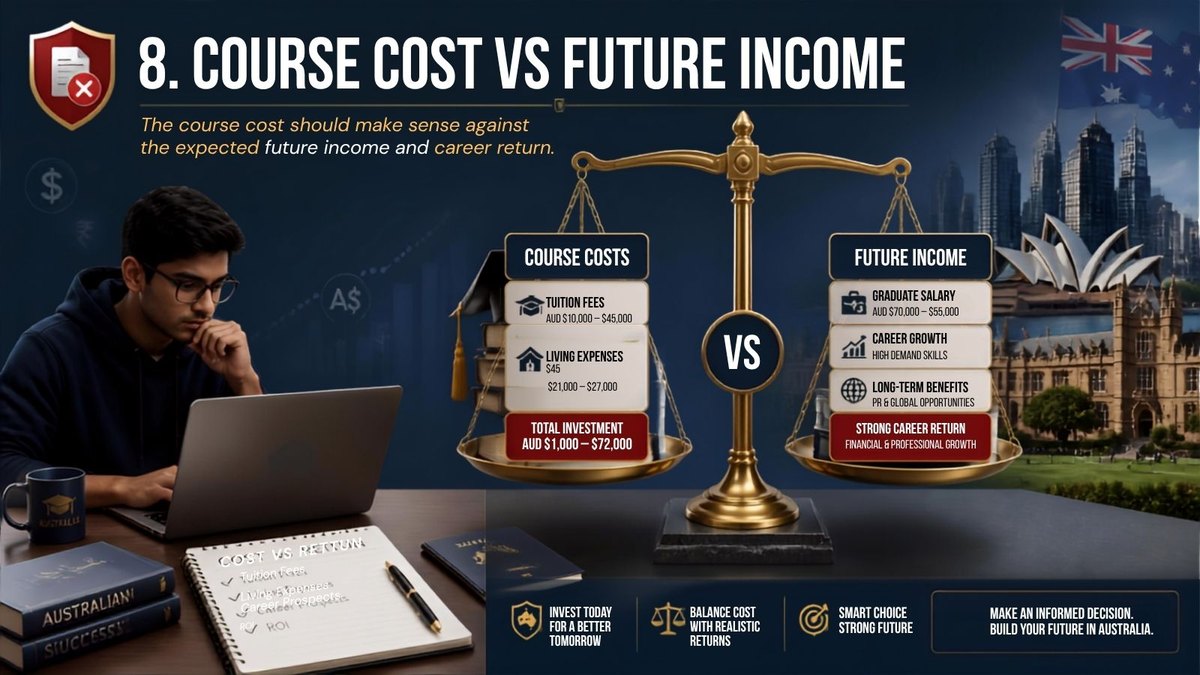
The Department weighs the salary and benefits the qualification would realistically bring. A very large spend on a short, low-level course leading to modest earnings raises the question of whether the qualification was really the objective.
This cuts both ways. A cheap course chosen only because it was affordable can look just as odd if it has no connection to your background.
What strengthens it: your realistic total cost set out honestly, the roles the qualification opens with credible salary information, and where the return is long-term, the reasoning behind it.
9. Salary or career claims are unsupported
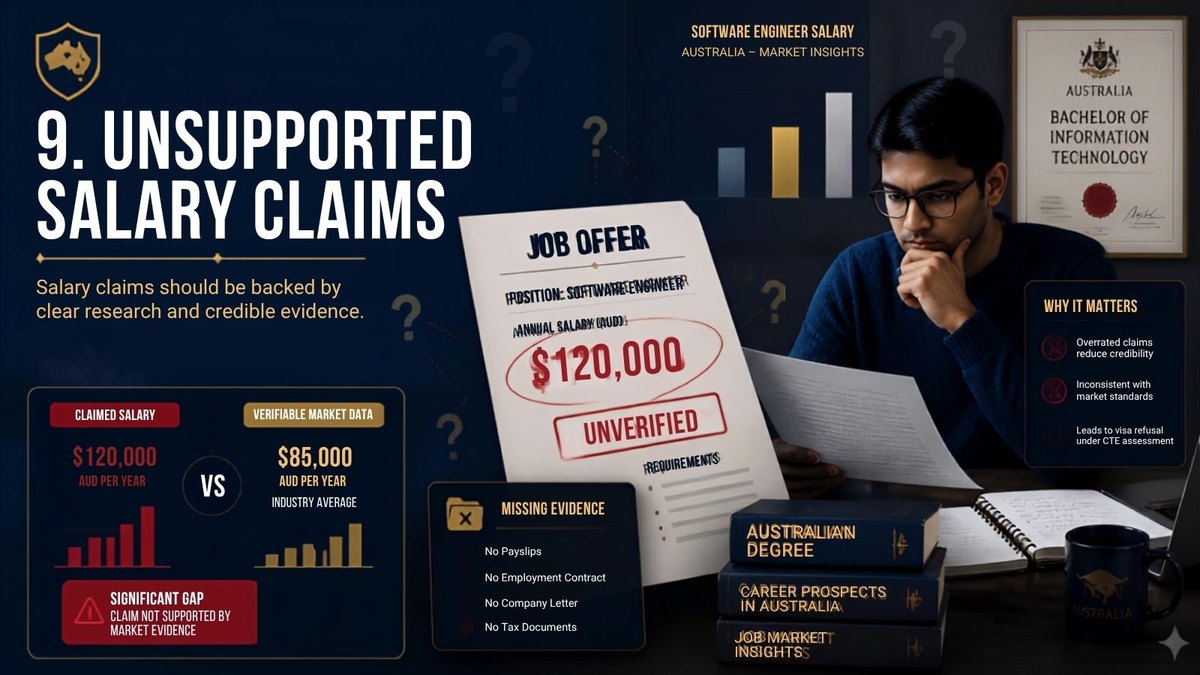
Overstated numbers damage credibility across the whole application. If an officer can see one claim is inflated, everything else gets read more sceptically.
Writing that you will earn a senior-level salary immediately after a diploma is not ambitious, it is implausible.
What strengthens it: published salary information for the specific role and location, a conditional employment offer where one genuinely exists, and honest ranges rather than a single flattering figure.
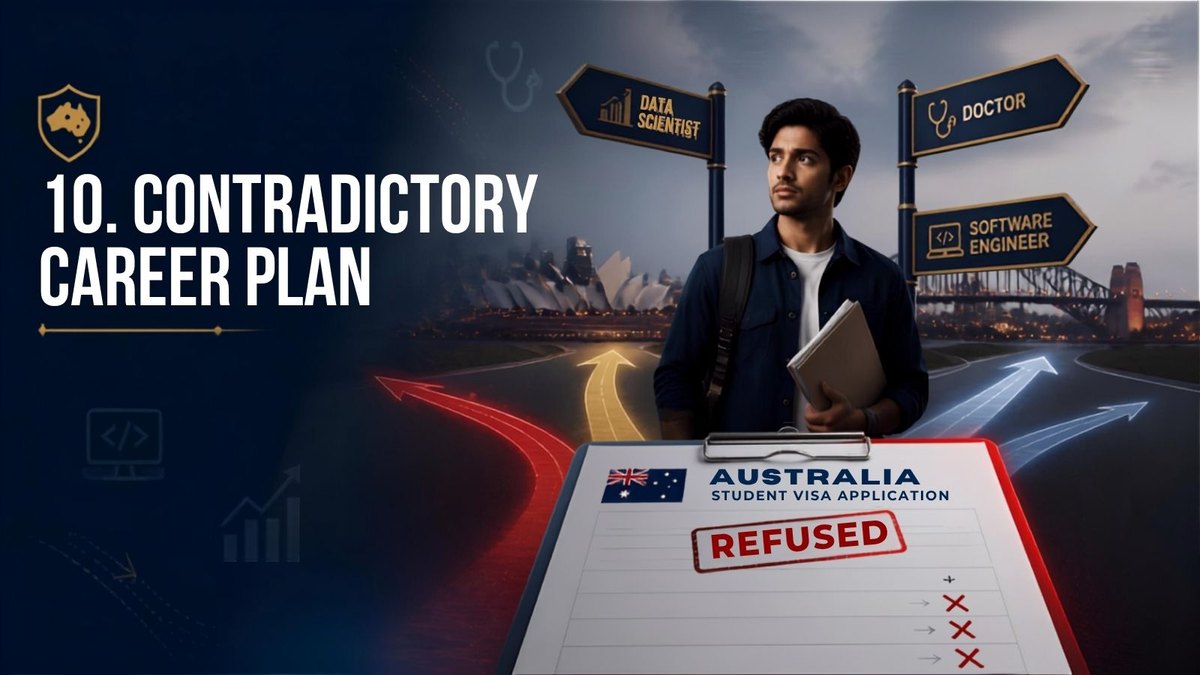
10. The career plan is unclear or contradictory
Your stated direction should be one story, told the same way in every part of the application. Contradiction is treated seriously because it suggests the answers were constructed rather than true.
A student writes about returning to the family business, then describes wanting hospital administration, then chooses an IT course. Each answer might be sincere. Together they do not form a plan.
What strengthens it: one clear direction stated consistently, with a logical sequence from qualification through course to role. Where you are changing direction, say so openly and explain why.
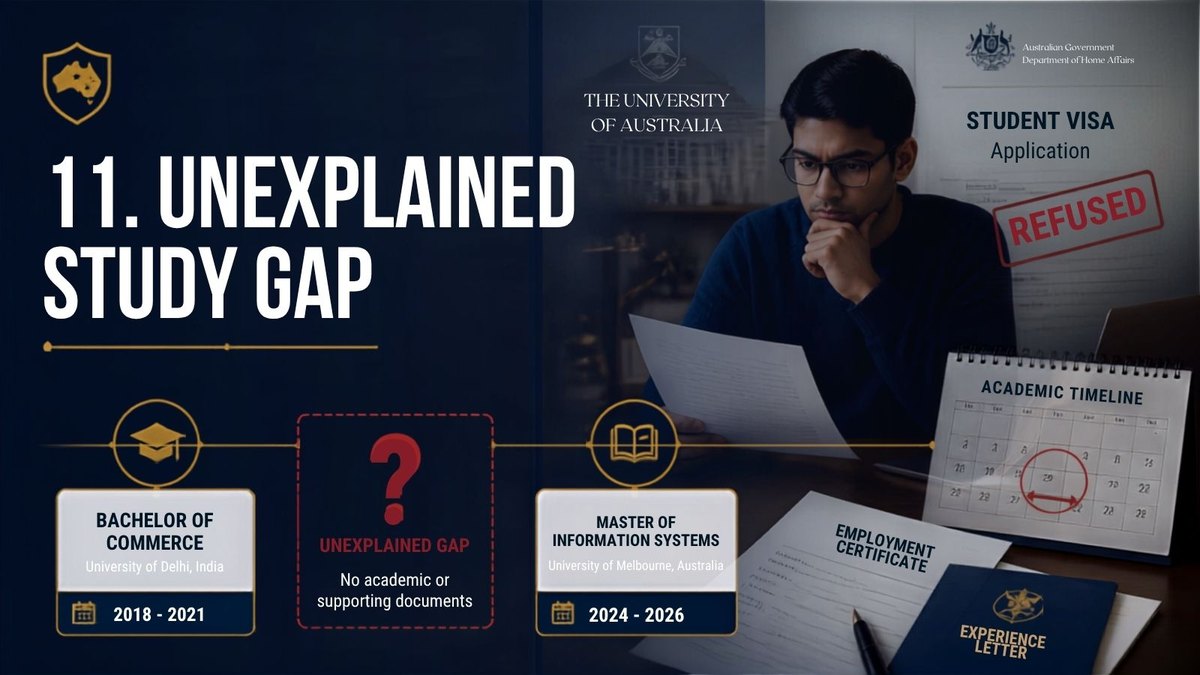
11. Study gaps and employment history are not explained
A gap is not a ground of refusal. An unexplained gap is a problem, because it feeds into the Genuine Student assessment. The Department specifically asks about gaps of more than two months in an academic year for those who have studied in Australia.
Three years after graduation with nothing said invites the officer to assume the worst. The same three years documented as work in the family firm, with returns and a role description, becomes relevant experience supporting the course choice.
What strengthens it: documents for whatever you actually did — employment records, business role, caring responsibilities, medical circumstances, exam preparation — connected to your current plan.
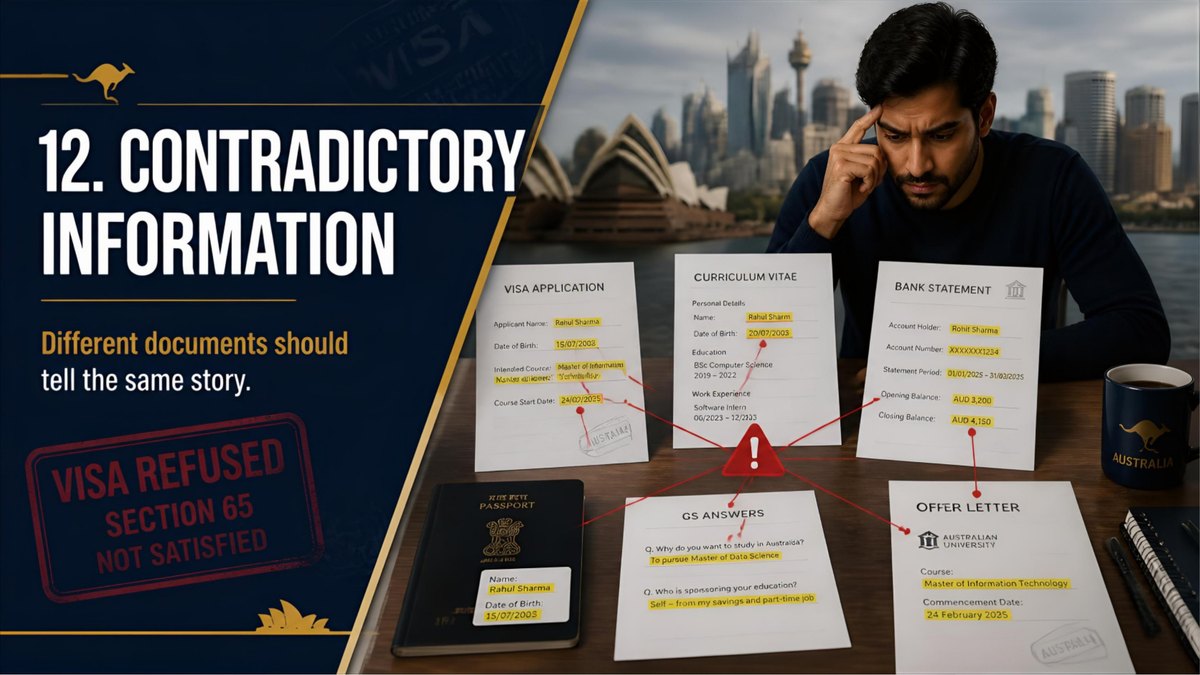
12. Information in different parts of the application contradicts itself
Officers cross-check. Dates that do not match, employment appearing in one document and not another, family members declared inconsistently. Individually these look careless. Together they undermine the credibility of the whole file.
The form says you worked from 2022 to 2024. The experience letter says 2021 to 2023. Nobody lied. The file now looks unreliable.
There is a more serious edge to this. Where an inconsistency looks deliberate rather than accidental, it can move from a credibility problem into PIC 4020 territory, which carries an exclusion period.
What strengthens it: read the complete application yourself before lodgement, including anything your agent filled in. Check every date against your documents and every spelling against your passport.
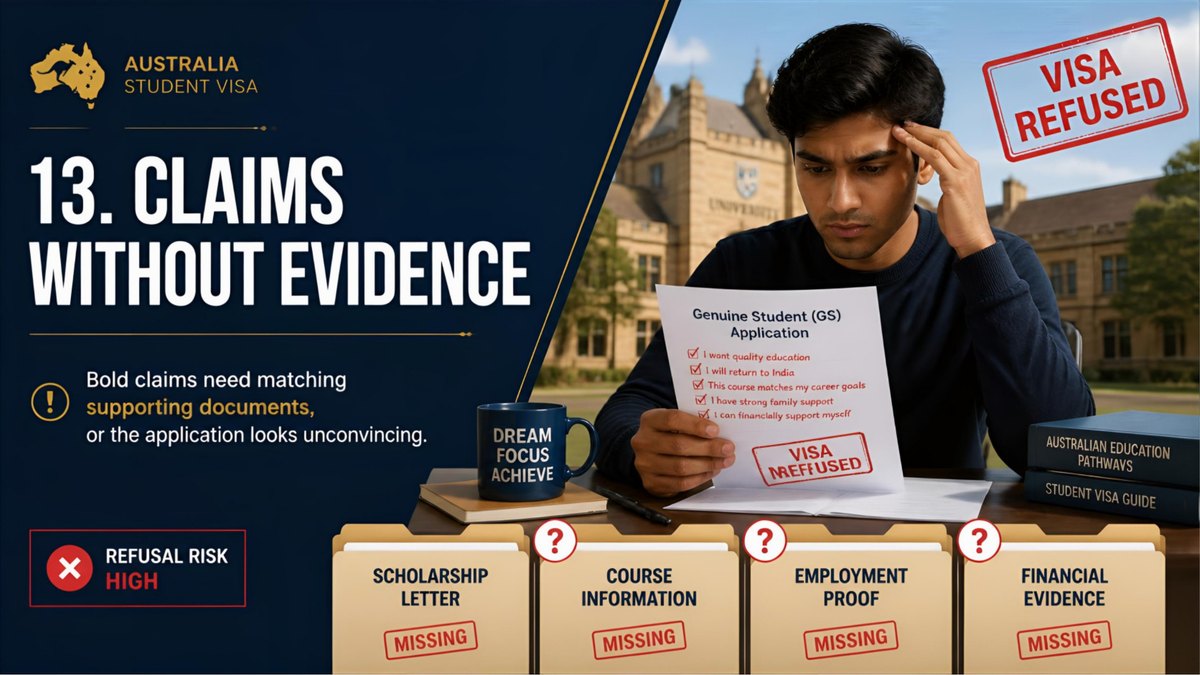
13. Important claims are made without supporting evidence
The Department states plainly that it gives more weight to statements supported by evidence. With 150 words per response, the attachments are where your case is actually made.
“My family owns substantial agricultural land” with nothing attached carries almost no weight. The same sentence with jamabandi and registry documents behind it is a fact.
What strengthens it: for every significant claim, ask what document proves it. Employment, business, property, family support and course research all need something behind them.
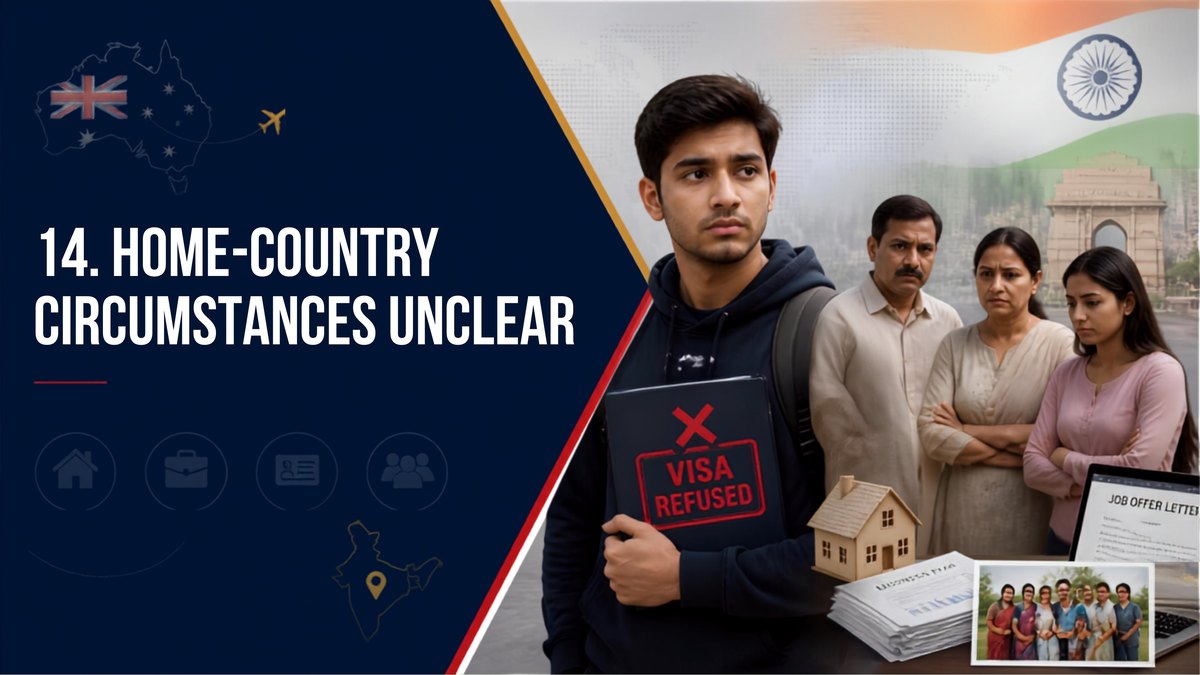
14. Home-country circumstances are unclear
Applications often describe the Australian future in detail and leave the present almost blank. That imbalance is itself a signal, because the officer is being asked to assess circumstances they cannot see.
What strengthens it: documents showing employment or business activity for the 12 months before lodgement, income tax returns or bank statements, family composition and dependants, property or assets, and any post-study employment offer including salary.
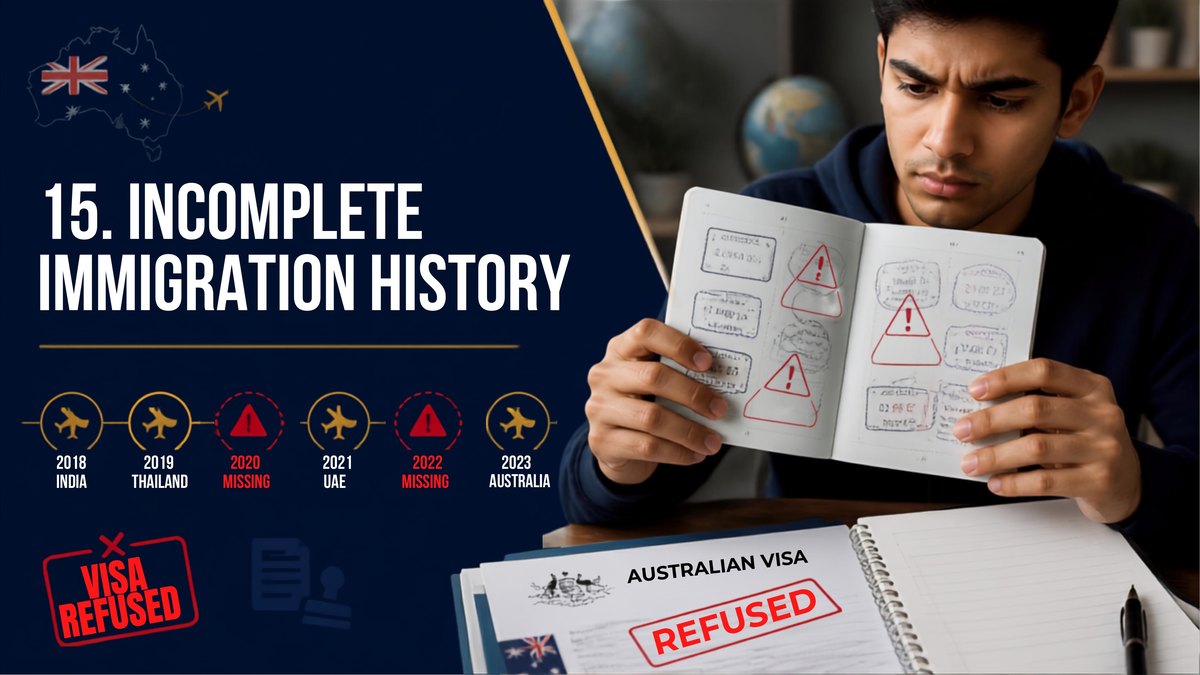
15. Immigration or travel history is incomplete
Home Affairs considers your visa and travel history for Australia and other countries, previous applications, and any refusals or cancellations. Gaps here are dangerous because the Department can often verify what you left out.
What strengthens it: a complete, accurate list of every visa applied for and every country visited, checked against your old passports as well as your current one. Where records are genuinely unavailable, say so rather than guessing.
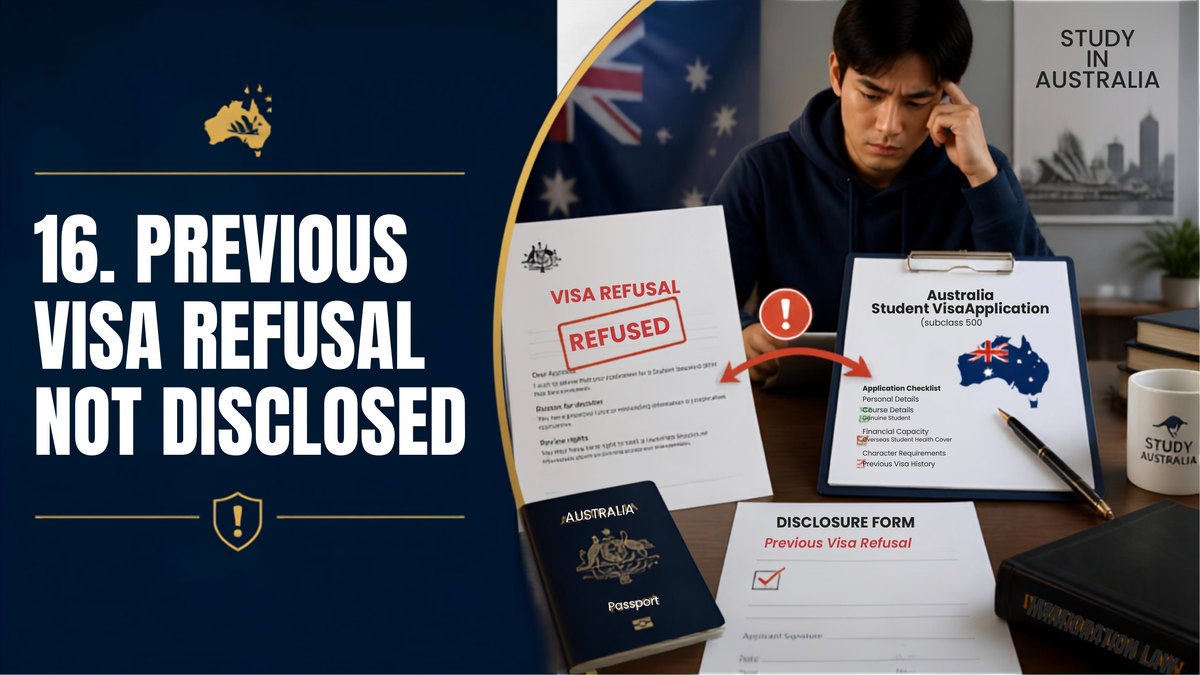
16. A previous visa refusal is not disclosed
This is the most damaging item on the list, because it can turn a manageable weakness into a multi-year exclusion.
PIC 4020 allows a visa to be refused where an applicant, or a member of their family unit, has given a bogus document or information that is false or misleading in a material particular. An exclusion period generally applies, commonly three years, and longer where the concern relates to identity. It can affect family members too.
Omissions count. Failing to declare a refusal can be treated as misleading information even if you did not think of it as lying. A refusal you declare is a problem you can explain. A refusal that is discovered is a much bigger problem.
What strengthens it: declare every refusal from every country and every visa type, including visitor visas. Attach the earlier refusal letter, state what the finding was, and explain what has materially changed since.
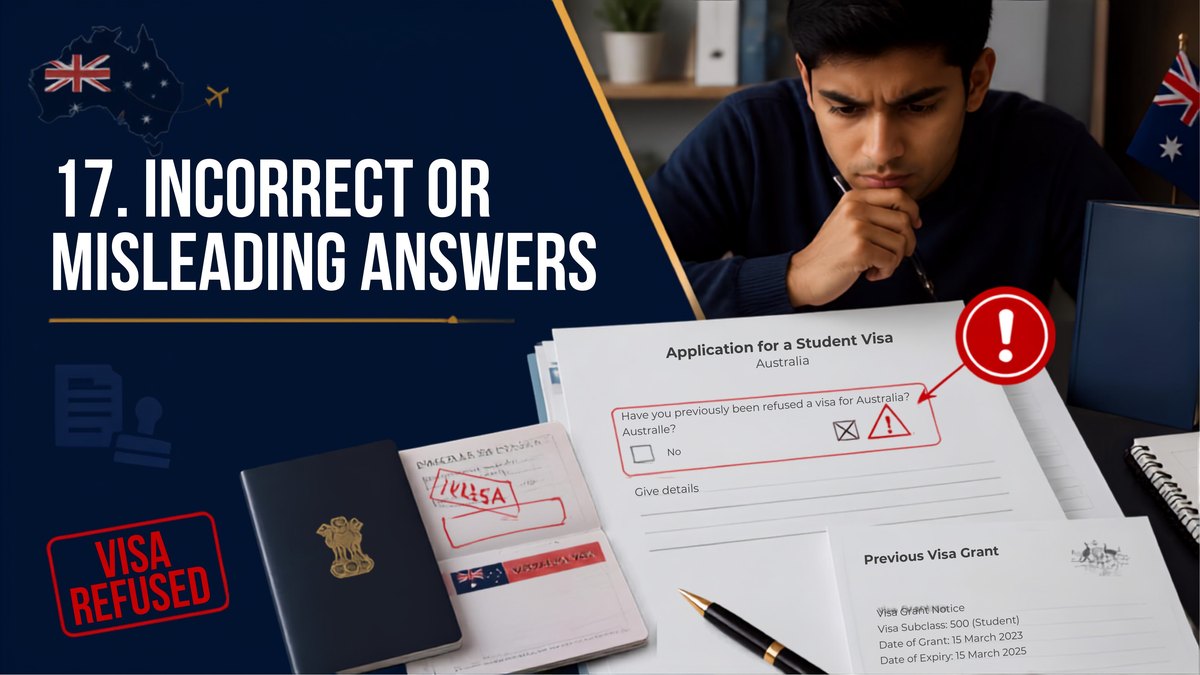
17. Incorrect or misleading answers on the form
Errors on the form are treated as your errors, whoever typed them. Many students never read the application their agent lodged, and the consequences land on the applicant, not the agent.
Depending on how it looks, an error can be treated as an honest mistake or as a material misstatement. The second carries an exclusion period.
What strengthens it: ask for the completed form rather than a summary, read every question and answer yourself, and check declarations about family members, dependants and marital status carefully. If you find an error after lodgement, correct it proactively.
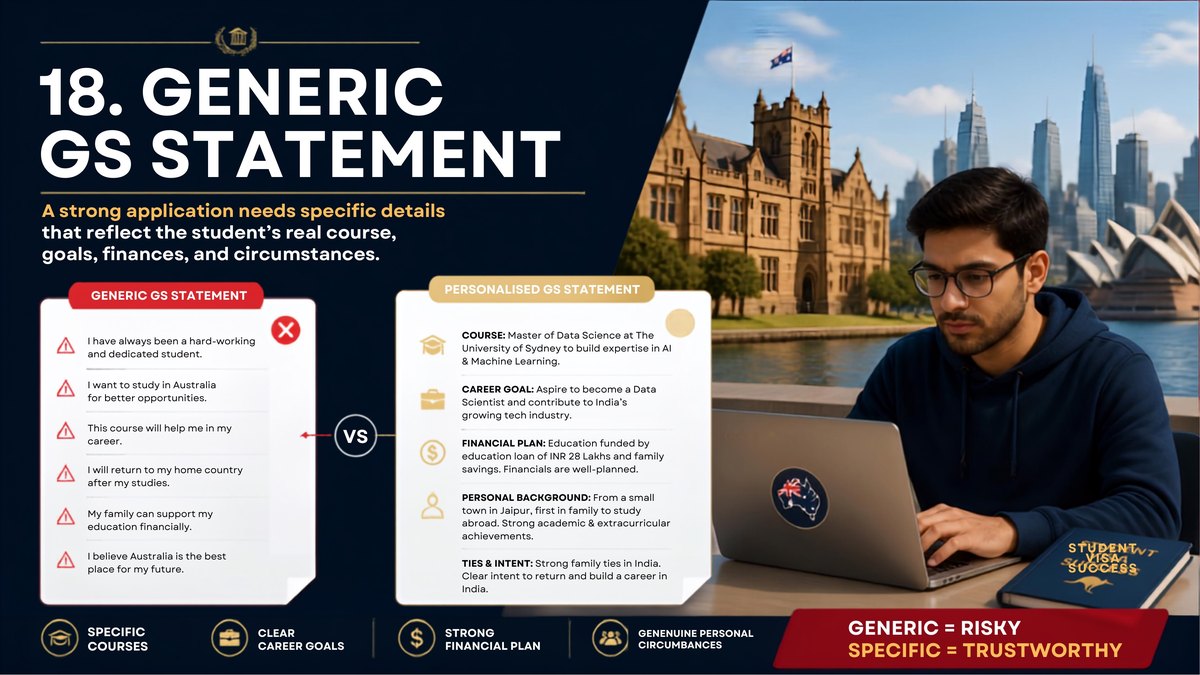
18. The application looks generic rather than personal
I have gone through the most common GS answer mistakes on video, in Hindi, if you want to hear how these responses actually read to a case officer.
Template answers read as templates, and officers see hundreds of them. Where one agency office submits many applications with near-identical wording, the pattern becomes visible.
Compare “Australia offers world-class education and a multicultural environment” with “I chose the Master of Data Science at this campus because the machine learning specialisation covers the analytics work I already do manually in my family’s distribution business.” One is a sentence. The other is a case.
What strengthens it: name your specific course, units, campus and provider. Use your own numbers, your own work, your own family circumstances, in your own English.
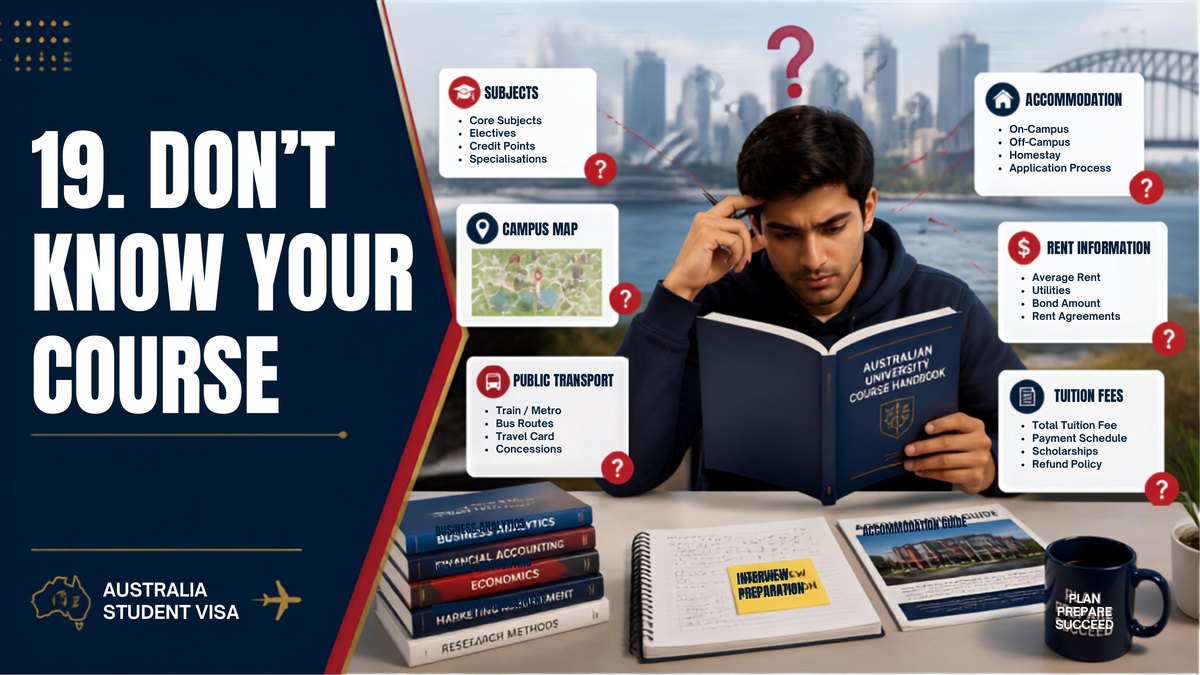
19. You do not know your course or living arrangements
Home Affairs assesses your knowledge of the proposed course, the provider and living in Australia, and the level of research you have undertaken. This is a listed consideration, not an optional extra.
What you should be able to state:
- Core subjects, electives, credit points and any specialisation
- Course duration, intake dates, campus location and delivery mode
- Total tuition and how it is paid
- Accommodation options and realistic weekly rent in that suburb
- Living costs beyond the visa minimum, and transport
- Provider accreditation and CRICOS registration
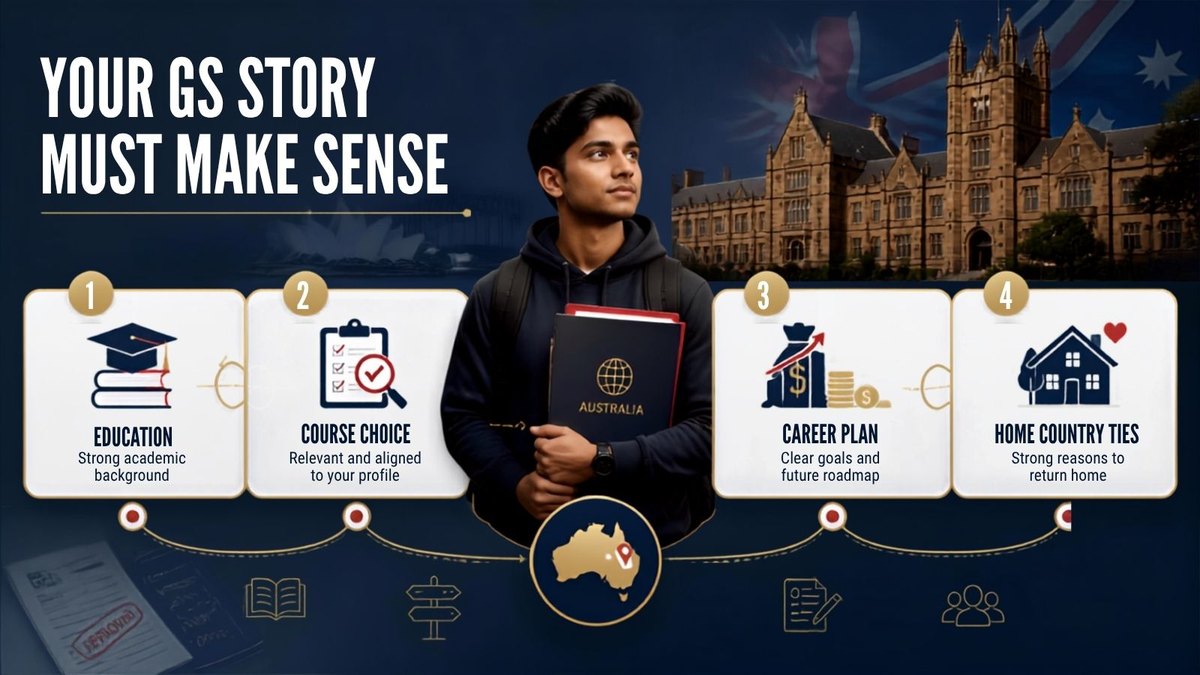
20. The overall Genuine Student story does not hold together
Of all the Australia student visa refusal reasons, this is the one that ties the other nineteen together. Home Affairs states that it considers your overall personal circumstances. It is a rounded judgement, not a checklist with a pass mark.
An application can meet the funds requirement, hold a valid CoE and show a good English score, and still be refused because the story does not connect. A student with a commerce degree, an aged care diploma and a stated plan to join the family business has three facts that do not follow from each other.
What strengthens it: read the finished application end to end as if you were the officer, and check that five things connect — your academic background, your course choice, your career plan, your funds and their source, and your circumstances at home. If one does not follow from the others, that is the gap the officer will find.
What to do once you know your Australia student visa refusal reasons
Do not lodge again the same week. Each application costs a fresh visa application charge, which starts at AUD 2,500 for the main applicant from 1 July 2026 and is generally not refunded on refusal. Each refusal also adds to the immigration history the next officer will read.
Read the decision letter three times. First, find the exact criterion that was not satisfied. Second, separate what the officer actually stated from what the underlying concern appears to have been. Third, find the procedural information: whether the decision is reviewable, who can apply and by when.
Then work out whether the finding was mechanical or a judgement. A missing OSHC policy or an expired CoE can be fixed and refiled quickly. Findings about GS, funds credibility or course fit cannot. Those need a materially different application.
The full process, including how review rights work and the recent change requiring most student visa reviews to be decided without an oral hearing, is set out in our guide to Australia student visa refusal and reapplication.
Australia student visa refusal reasons: frequently asked questions
What are the most common Australia student visa refusal reasons for Indian students?
The Australia student visa refusal reasons we see most often cluster around a few themes: a Genuine Student story that is generic or inconsistent, funds that are real but not evidenced, a course that does not follow from the applicant’s education or work, contradictions between different parts of the file, and undeclared or incorrectly declared immigration history.
Can a high IELTS or PTE score guarantee an Australia student visa?
No. Nothing guarantees a visa. An English score demonstrates English proficiency and nothing else. It does not address funds, course fit or the Genuine Student requirement, and students with strong scores are refused regularly on those grounds.
Can a large bank balance guarantee an Australia student visa?
No. The amount is only part of the test. The Department also considers where the money came from and whether it is genuinely available to you. A large balance appearing shortly before lodgement, with no documented history, can raise more questions than a smaller well-evidenced one.
Does a study gap cause an Australia student visa refusal?
A gap by itself is not a ground of refusal. An unexplained gap is a problem, because it feeds into the Genuine Student assessment. Document what you did during the period and connect it to your current plan.
Can I apply again after an Australia student visa refusal?
If you applied from outside Australia there is generally no fixed waiting period, so you can lodge again once your application is genuinely stronger. The exception is where an exclusion period applies, such as a refusal involving false or misleading information. Your decision letter is the authority on your situation.
Should I disclose a previous visa refusal?
Yes, always, including refusals from other countries and for other visa types. Non-disclosure can be treated as false or misleading information under PIC 4020, which generally carries a three-year exclusion period. A declared refusal can be explained. A discovered one is far harder to recover from.
Should I change my university after a visa refusal?
Change it if the refusal questioned the fit between your background and your course or provider. Changing provider while keeping an illogical course choice usually achieves nothing.
Do I still need to write a GTE statement?
No. GTE was replaced by the Genuine Student requirement for applications lodged on or after 23 March 2024. You answer GS questions inside the online form, in about 150 words each, and the evidence you attach matters more than the wording.
Final word
An Australia student visa refusal does not automatically mean you can never obtain an Australian student visa. The important question is not whether you were refused. It is why, and whether those concerns can genuinely be addressed.
Some can, straightforwardly. Others go deeper. If the decision maker was not satisfied that your course fits your background, or that your funds are what you say they are, no amount of rewriting fixes that. Those need a different application, built on your actual circumstances.
And accept the honest possibility that Australia may not be the right fit for your profile right now. A different course, a different country, or a year spent strengthening your file is a legitimate outcome. Spending another AUD 2,500 on an application that has not changed is not.
The decision belongs to the Department of Home Affairs. What you control is whether your application is complete, consistent, honest and properly evidenced.
Watch the full Australia study visa webinar
If you would rather work through the whole process than read it, this is the full webinar covering the Australia study visa for the October 2026 intake, including the Genuine Student requirement, funds and documentation. It runs about 47 minutes.
Official sources
- Department of Home Affairs, Student visa (subclass 500)
- Department of Home Affairs, Genuine Student requirement
- Department of Home Affairs, Ministerial Direction No. 106
- Study Australia, Student visa (subclass 500)
Requirements and figures verified against these sources in August 2026. Immigration rules change frequently; confirm the current position before you lodge.

Got an Australia student visa refusal?
Don’t simply submit the same application again. First understand why it was refused.
We offer refusal analysis, profile assessment, evidence review and application strategy. We do not offer guaranteed outcomes, and neither can anyone else. The decision belongs to the Department of Home Affairs.
Vinay Hari
Education & Immigration Consultant
Angels Immigration & Education Consultant
Phone: +91 95131 65527 | +91 73075 30886
Email: me@vinayhari.com
Head Office: 505, Sector 82, Mohali, Punjab 140308
Branch Office: BMC Chowk, Jalandhar, Punjab 144001